SSR & Pre-Render for AI Websites
Your website looks great… but Google can't read it fast enough.
We build SSR and Pre-Renders for your AI-generated website so it's fully visible to Google, Bing, ChatGPT, Perplexity, Claude, and Gemini — on the first request.
Not sure which plan you need, book a consultation
Use our interactive Service Builder to combine web design, SEO, AEO, and automation into a plan tailored to your business.
Your website looks great… but Google can't read it fast enough.
If your site depends on JavaScript to load, you may be losing rankings.
A beautiful website means nothing if Google sees a blank page first.
Search engines don't wait around for slow JavaScript.
Pre-rendered pages give Google what it wants — instantly.
React sites can rank — but only if they're rendered the right way.
Why AI Websites Need SSR or Pre-Rendering
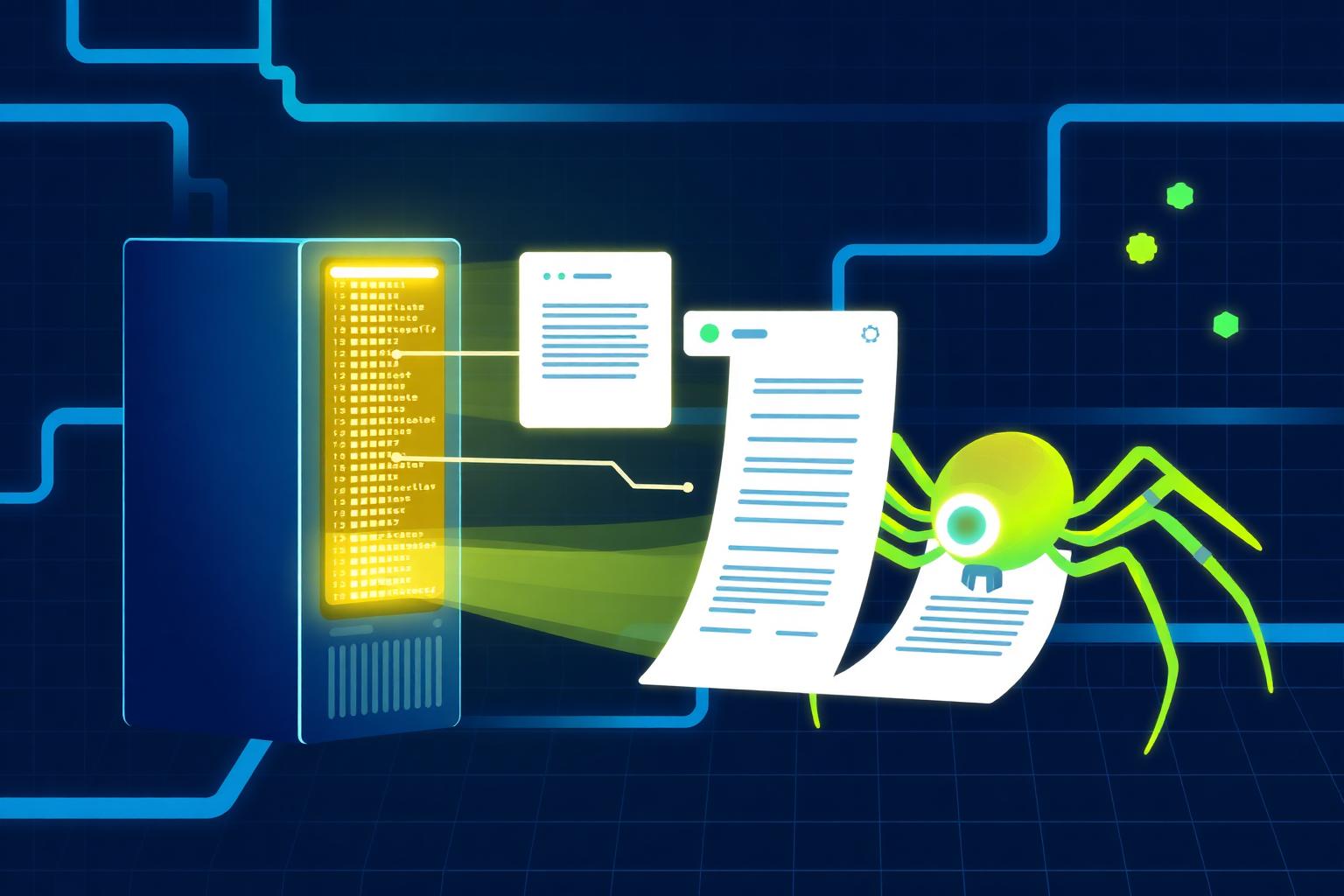
Most AI website builders generate single-page React or Vue apps. When a search engine or AI crawler hits the page, the first thing it sees is an empty<div id="root"></div>with zero indexable content.
Google may render the JavaScript on a delayed second pass — but many pages never get re-crawled. And the AI crawlers from OpenAI, Anthropic, Perplexity, and Google-Extended do not execute JavaScript at all.
SSR and Pre-Rendering both solve this by serving complete HTML on the first request — exactly what crawlers and AI engines need to read, index, and cite your content.
SSR vs. Pre-Render: The Hidden SEO Difference
Both make your AI website crawlable. The right choice depends on what your pages need to do.
SSR
Server-Side Rendering. The server builds the HTML on every request. Best for personalized, dynamic, or constantly-changing content.
Dynamic per-request HTML
The server builds a fresh HTML document for every visitor — perfect for personalized, logged-in, or constantly-changing content.
Real-time data baked in
Inventory, pricing, and user-specific data are server-rendered into the page before the browser ever sees it.
Crawlers see full content instantly
Googlebot, Bingbot, and AI crawlers receive complete HTML on the first request — no JavaScript execution required.
Pre-Render
Static pages built ahead of time. Every page is built once at deploy and served from a CDN. Fastest, cheapest, and perfect for marketing sites.
Static HTML built ahead of time
Every public page is generated at build time as a flat HTML file and served from a CDN edge in milliseconds.
Fastest possible load times
No server work per request. Pages stream from the edge with sub-second TTFB and near-perfect Core Web Vitals.
Perfect for AI crawlers
GPTBot, ClaudeBot, PerplexityBot, and Google-Extended see complete, structured HTML — exactly what AI engines need to cite you.
| Aspect | SSR | Pre-Render |
|---|---|---|
| When HTML is built | On every request, on the server | Once, at build time |
| Speed to first byte | Fast (server work required) | Fastest (CDN edge) |
| Best for | Personalized / dynamic content | Marketing & content pages |
| Crawler visibility | Full HTML on first response | Full HTML on first response |
| AI engine citations | Excellent | Excellent |
| Hosting cost | Higher (compute per request) | Minimal (static files) |
| Updates | Instant | After next build / revalidation |
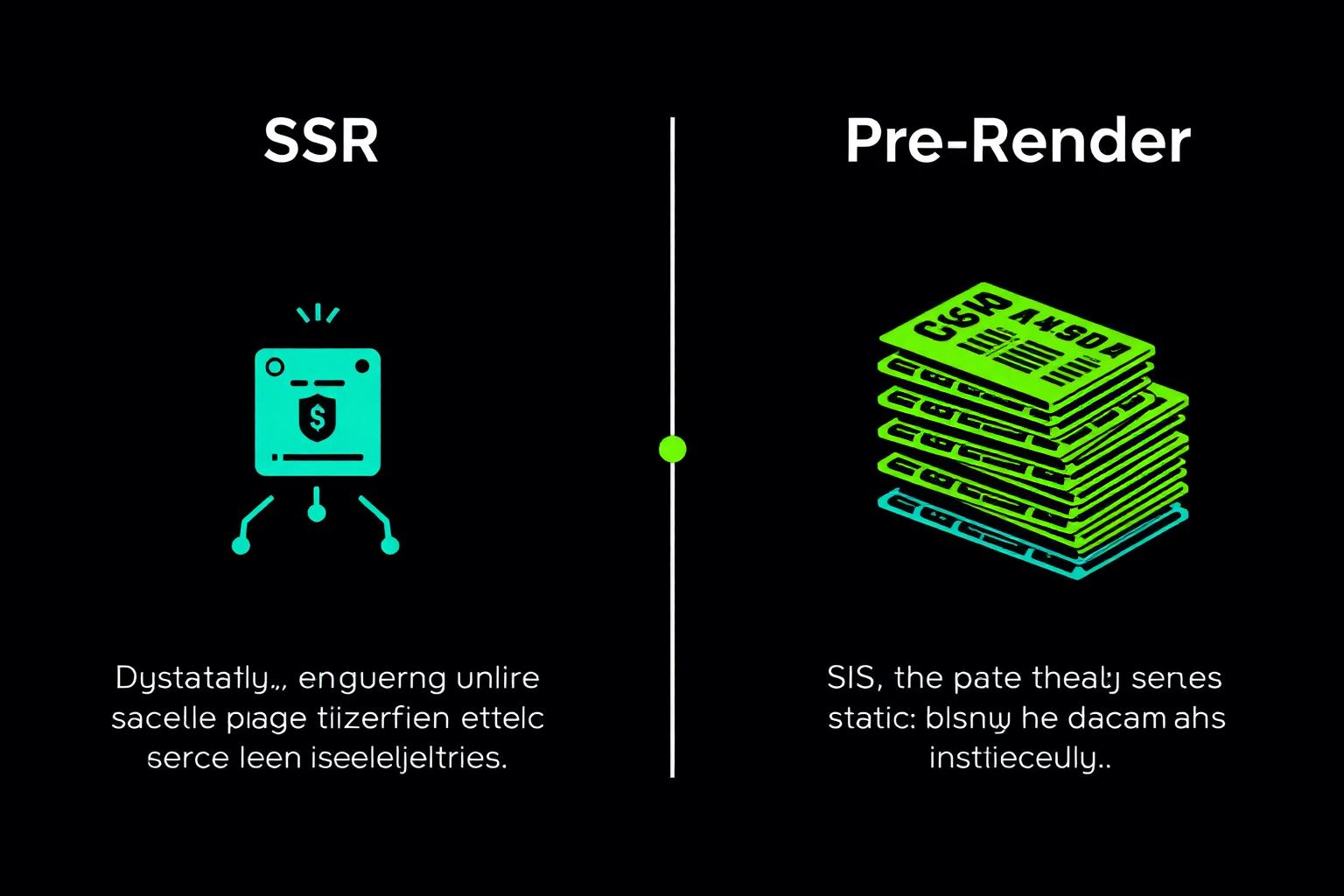
SSR helps users with fresh dynamic data. Pre-Render helps crawlers with instant static HTML. Smart sites use the right one for the right page.
Our 6-Step SSR & Pre-Render Process
A proven engineering workflow — engineered for SEO, AEO, and Core Web Vitals.
Audit Render Path
We crawl your site as Googlebot and as GPTBot to see exactly what HTML they receive on first byte. No guesswork.
Choose the Right Strategy
Marketing pages → pre-render. Dashboards & personalized routes → SSR. Hybrid where it matters.
Build the Render Pipeline
We engineer SSR with Node/Edge functions or pre-render with vite-plugin-static, Astro, or Next-style SSG.
Inject SEO + AEO Layer
Per-page meta, canonical, Open Graph, 9+ Schema.org types, Speakable, llms.txt, and FAQPage markup baked into the rendered HTML.
Validate & Ship
Lighthouse, Rich Results Test, fetch-as-Google, AI crawler simulators. Every page proven before launch.
Monitor & Tune
Index coverage, Core Web Vitals, and AI citation tracking — monthly reports and ongoing tuning.
Frequently Asked Questions
Straight answers about SSR, pre-rendering, and AI website visibility.
Related Services
Explore our other services to create a complete digital marketing strategy for your Columbus business.
Columbus SEO Services
Local SEO that ranks Columbus businesses on Google and Maps.
Learn MoreColumbus Google Ads Management
PPC and Local Services Ads (Google Guaranteed) for Columbus, Ohio.
Learn MoreAI Website Search Tuning
Tune your site to be cited by ChatGPT, Perplexity, and Gemini.
Learn MoreReact vs WordPress SEO
Why React websites outperform WordPress for SEO and Core Web Vitals.
Learn MoreMake Your AI Website Visible to Google and AI — Today
Fast pages rank. Invisible pages don't. Get a free render audit and we'll show you exactly what Googlebot and GPTBot see on your AI-built site.
Related Articles
Learn more about best practices and strategies from our blog.
Get Your Business on ChatGPT With AEO: The Complete 2026 Playbook
ChatGPT now answers more than a billion business questions every week — and it almost never sends a click. Here is the exact AEO playbook we use to get Columbus businesses cited as the source ChatGPT recommends.
Read ArticleGet Your Business on Google Gemini With AEO: A 2026 Strategy Guide
Google Gemini and AI Overviews now answer more than half of all U.S. searches before a user clicks. Here is how to make sure your business is the source Gemini quotes — not the one it forgets.
Read ArticleGet Your Business on Perplexity With AEO: The Citation Engine Playbook
Perplexity is the most citation-obsessed AI search engine on the market. Every answer comes with sources — and getting your business listed as one of those sources is one of the highest-ROI AEO moves you can make in 2026.
Read ArticleFrom the desk of our team
Attributed to The Real Social Company — Founder & Lead Strategist · 23+ years
What we've actually seen
Across 500+ Columbus engagements since 2002, the businesses that win are not the ones with the prettiest site or the loudest ads — they're the ones who treat their website, SEO, and AI-search presence as a single connected system.
Where most projects go wrong
Most projects fail because the website, SEO, and content all live in different vendors' heads. By month three, nobody owns the outcome and rankings flatline.
Our take
We build, optimize, and maintain everything in-house. One team, one number to call, one set of dashboards. That's the only way we've found to keep results compounding past the 6-month mark.
Our numbers on this
Pulled from our own Columbus client engagements — not industry averages.
23+
Years in Columbus
Founded 2002
500+
Businesses served
Central Ohio
95+
Avg PageSpeed
Across new builds
0.8s
Median load time
AI-built React sites