
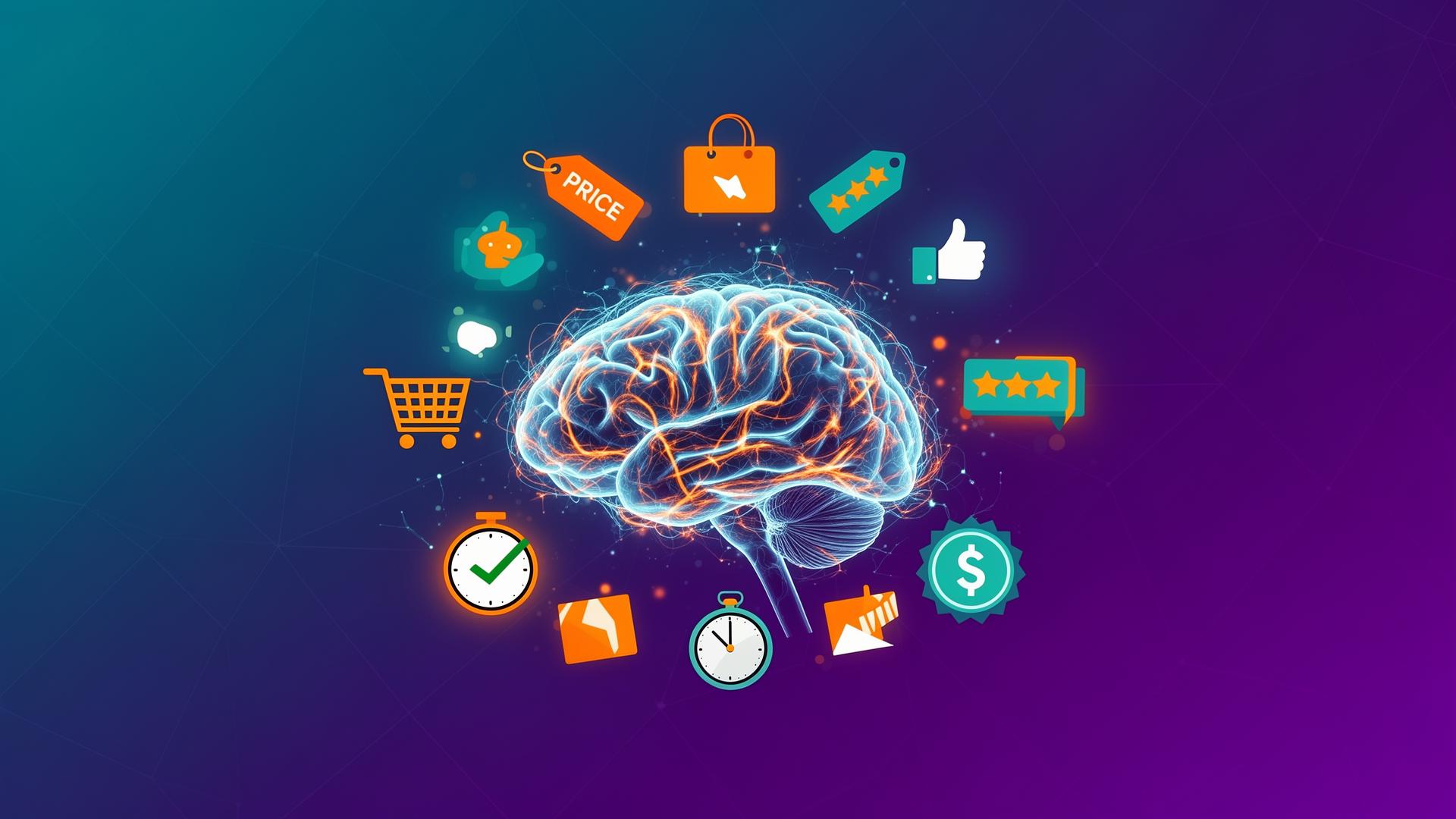
The Real Reasons Your Customers Buy
*How Human Psychology Shapes Every Decision (And What It Means For Your Business)*
If you're a small business owner, you might think your customers buy things because they've compared all the facts and made a logical choice. Maybe you believe that if you clearly lay out the features, benefits, and the best price, the sale will follow. But here's the surprising truth: most customers don't buy this way at all. This common misunderstanding can quietly drain your business of revenue, no matter how good your offer is.
The truth is far more complex and fascinating. Every customer decision is influenced by cognitive biases—mental shortcuts our brains use to process information quickly. These psychological patterns operate below conscious awareness, driving purchasing behaviors in ways that seem illogical but are remarkably predictable.
Understanding these cognitive biases isn't about manipulation or trickery. It's about aligning your marketing and sales approach with how human beings actually make decisions. When you work with natural psychological tendencies rather than against them, you create better customer experiences, stronger relationships, and yes—more sales.
This comprehensive guide explores the five most powerful cognitive biases affecting small business buying decisions. More importantly, it shows you exactly how to apply this knowledge to transform your marketing strategy, sales process, and customer communications.
The 5 Cognitive Biases That Drive Buying Decisions
Loss Aversion
Fear of losing hurts 2× more than gaining feels good
Social Proof
We follow what others like us are doing
Authority Bias
We trust and follow recognized experts
Anchoring
First numbers shape all future judgments
Scarcity
Limited availability increases perceived value
95% of buying decisions are made by System 1 thinking — fast, emotional, and automatic
---
The Reality of Irrational Decision-Making
Before we jump into the details, let's clear up a big myth: people aren't the perfectly rational thinkers that classic economics describes. Nobel Prize-winning psychologist Daniel Kahneman showed that, inside all of us, there are really two ways of making decisions. System 1 is quick, automatic, and driven by feelings—it's the gut reaction that happens in a split second. System 2 is slower, more careful, and logical—it's the part that weighs pros and cons and double-checks our work.
Here's the surprising part: experts estimate that about 95% of buying decisions happen in System 1. Your customers aren't sitting down to debate every detail or make neat lists of pros and cons. They're going with their gut, making fast, emotional choices—and then finding reasons to back those choices up later. That might sound flawed, but it's actually a survival skill we've inherited from our ancestors. Quick decisions helped them stay safe and thrive in a world full of unknowns.
So, what does this mean for you as a business owner? If you're relying on facts and logic alone, your message might be missing the mark. You're talking to your customers' logical brains when you should be reaching their instinctive, emotional side. The psychological biases we'll cover are your roadmap for connecting with how people really decide—automatically, in the blink of an eye.
---
Loss Aversion: Why Fear Drives More Action Than Desire
Let's start with one of the most powerful forces in why people buy: loss aversion. Put simply, losing something hurts us about twice as much as gaining something similar feels good. That means your customers are much more motivated to avoid losing $100 than they are to go out and earn an extra $100.
You can see this play out everywhere:
Consider how this plays out in real business scenarios. A local restaurant struggles to get customers to try their new healthy menu options. They've emphasized all the benefits—fresh ingredients, better nutrition, great taste. Yet customers stick with familiar choices. The fear of wasting money on something they might not enjoy outweighs the potential benefits of a healthier meal.
The solution isn't to pile on more benefits. It's to reduce the perception of risk. Smart businesses leverage loss aversion by offering guarantees, free trials, and risk reversals. They frame their offerings not just in terms of what customers gain, but what they stand to lose by not taking action.
Practical Applications
Instead of saying "Save 20% with our annual plan," consider "Don't lose out on 20% savings—secure your annual rate today." Instead of "Try our new service," position it as "Lock in founder's pricing before it increases next month." The substance remains the same, but the psychological impact is dramatically different.
Loss aversion also explains why limited-time offers work so effectively. It's not just about creating urgency—it's about triggering the fear of missing out. When customers perceive that an opportunity might disappear, loss aversion kicks in and drives action. However, this must be used ethically and authentically. False scarcity destroys trust and damages long-term relationships.
---
Social Proof: The Invisible Force Guiding Every Decision
Humans are inherently social creatures. We look to others for cues about appropriate behavior, especially in uncertain situations. This tendency, known as social proof, profoundly influences purchasing decisions. When we see others choosing a particular product or service, we unconsciously assume they know something we don't.
Social proof operates at multiple levels:
The power of social proof increases dramatically when the "others" we're observing are similar to us. This is why demographic and psychographic targeting matters so much. A testimonial from a fellow small business owner carries far more weight than one from a Fortune 500 company. A review from someone in the same industry or facing similar challenges resonates more deeply than generic praise.
The Testimonial Difference
Consider the difference between these two testimonials:
Generic: "Great service! Highly recommend!"
Specific: "As a small dental practice, we struggled with patient scheduling. After implementing their system, we reduced no-shows by 40% and saved 10 hours per week on administrative tasks."
The second testimonial provides social proof while also addressing specific pain points and demonstrating measurable results. It allows similar businesses to see themselves in the success story.
Social proof extends beyond traditional testimonials. User-generated content, client logos, case studies, and even real-time activity notifications ("3 people are viewing this product") all leverage this powerful bias. The key is authenticity. Modern consumers are sophisticated enough to spot fake reviews and manufactured social proof. One genuine, detailed testimonial outweighs dozens of generic five-star ratings.
---
Authority Bias: Why Expertise Matters More Than You Think
We're hardwired to defer to authority figures and experts. This cognitive bias served our ancestors well—following the guidance of experienced leaders increased survival odds. Today, authority bias continues to shape purchasing decisions in subtle but powerful ways.
Authority bias doesn't require celebrity endorsements or advanced degrees (though these certainly help). It's about establishing and demonstrating expertise in ways your target audience recognizes and values. For small businesses, this often means becoming the trusted local expert in your specific niche.
The challenge is that many small business owners underestimate their own authority. They assume they need decades of experience or formal certifications before positioning themselves as experts. In reality, authority is relative. You don't need to be the world's foremost expert—you just need to know more than your target customers about solving their specific problems.
Building Authority
Building authority requires a consistent demonstration of expertise across multiple touchpoints:
A local HVAC company, for example, might establish authority by creating seasonal maintenance guides, explaining the science behind energy efficiency, or offering free assessments that demonstrate technical knowledge. Each interaction builds credibility and positions them as the trusted expert when purchase decisions arise.
The presentation of authority matters as much as its substance. Professional design, clear communication, and attention to detail all signal competence. Certifications, awards, and affiliations should be prominently displayed but not overemphasized. Media mentions, speaking engagements, and published articles serve as powerful indicators of authority.
---
Anchoring: The First Number Sets the Stage
Anchoring bias reveals a fascinating quirk of human psychology: the first piece of information we receive about a topic disproportionately influences all subsequent judgments. In pricing and negotiations, the initial number presented becomes an anchor that affects the perception of all following numbers.
This bias explains why luxury brands often display their most expensive items prominently. It's not that they expect everyone to buy the $10,000 watch—but seeing it first makes the $2,000 watch seem reasonable by comparison. The anchor shifts the entire frame of reference.
Strategic Pricing Example
A marketing agency might structure its service packages as:
By presenting the highest tier first, the middle option appears more reasonable and the basic package seems like exceptional value. Without the $5,000 anchor, $3,000 might seem expensive. With it, $3,000 becomes the sensible middle ground.
Anchoring extends beyond pricing. The first benefit mentioned, the initial problem identified, or the opening comparison all serve as anchors that influence subsequent perceptions. This is why effective sales presentations start by establishing the cost of the problem before introducing the solution. The pain point becomes the anchor against which the investment is evaluated.
Website designers intuitively understand anchoring when they place "before" images ahead of "after" transformations. The problematic "before" state anchors expectations, making the "after" improvement appear more dramatic. Small businesses can apply this same principle across all customer communications.
---
Scarcity: The Psychology of Limited Availability
Scarcity bias reflects a simple psychological truth: we value things more when they're less available. This isn't just about fear of missing out—it's about how our brains assign value based on accessibility. Rare items feel more valuable, regardless of their objective worth.
The challenge with scarcity is that it's been overused and abused by marketers to the point where consumers have developed skepticism. "Only 3 left in stock!" notifications and countdown timers have become so common that they often trigger suspicion rather than action. Yet when implemented authentically, scarcity remains incredibly powerful.
Authentic Scarcity
Real scarcity exists in many small business contexts:
The key is communicating these genuine constraints in ways that create urgency without seeming manipulative.
A consultant might note: "I only work with five clients at a time to ensure dedicated attention to each business. Two spots are opening up next quarter." This frames limited availability as a benefit (dedicated attention) rather than a pressure tactic.
Scarcity becomes more powerful when combined with social proof. "Only 3 spots remaining—7 businesses have already registered" leverages both biases simultaneously. The limited availability creates urgency while the social proof validates the decision.
Time-based scarcity often outperforms quantity-based scarcity for small businesses. Seasonal offerings, enrollment periods, and promotional windows feel more natural and less manipulative than arbitrary stock limitations. They also align with business operations and planning cycles.
---
Practical Implementation: Turning Psychology Into Strategy
Understanding these cognitive biases is only valuable if you can apply them effectively in your business. Here's how to transform psychological insights into practical marketing and sales strategies:
Step 1: Audit Your Customer Touchpoints
Examine your website, sales materials, email campaigns, and customer service interactions through the lens of these five biases. Where are you inadvertently working against psychological tendencies? Where could you better align with natural decision-making processes?
Step 2: Develop Psychological Buyer Personas
Go beyond demographics to include psychological profiles:
Step 3: Create a Messaging Hierarchy
Address cognitive biases at each stage of the customer journey:
Step 4: Test Systematically
A/B testing allows you to measure the impact of different cognitive bias applications:
Data-driven optimization ensures you're applying psychology effectively, not just theoretically.
Step 5: Train Your Team
---
Ethical Considerations and Long-Term Success
With great psychological insight comes great responsibility. These cognitive biases are powerful tools that can be used to build genuine value or to manipulate and deceive. The difference lies in intent and implementation.
Ethical application of behavioral psychology means using these insights to help customers make decisions that genuinely benefit them. It's about removing friction from good decisions, not tricking people into bad ones. When you understand that customers fear loss more than they desire gain, you can structure offers that reduce risk and build confidence. When you recognize the power of social proof, you can showcase authentic success stories that help prospects envision their own success.
The most successful businesses use behavioral psychology to create win-win scenarios. They understand that long-term success comes from customer satisfaction, repeat business, and referrals—all of which require genuine value delivery. Manipulation might generate short-term sales, but it destroys the trust and relationships that sustainable businesses depend on.
---
Conclusion: The Competitive Advantage of Psychological Fluency
In today's hypercompetitive business environment, understanding customer psychology isn't optional—it's essential. Your competitors are already influencing decisions through cognitive biases, whether intentionally or accidentally. The question isn't whether these psychological forces will affect your business, but whether you'll harness them deliberately and ethically.
The five cognitive biases we've explored—loss aversion, social proof, authority bias, anchoring, and scarcity—represent just the beginning of behavioral psychology's applications in business. As you become more fluent in these psychological principles, you'll start recognizing patterns everywhere:
Most importantly, you'll stop fighting against human nature and start working with it. Instead of wondering why customers don't make "logical" decisions, you'll understand the very real logic of psychological decision-making. This shift in perspective transforms everything from product development to customer service, from pricing strategy to promotional campaigns.
The businesses that thrive in the coming decade won't be those with the best products or the lowest prices. They'll be those who best understand and serve the psychological needs of their customers. By mastering the cognitive biases that drive decisions, you position your business not just to meet customer needs but to anticipate and exceed them in ways that feel almost magical.
Start small. Choose one cognitive bias and one customer touchpoint. Apply the principle thoughtfully and measure the results. Build from success and learn from experiments. Over time, psychological fluency becomes second nature, and what once seemed like mysterious customer behavior becomes predictable and manageable.
Your customers aren't irrational—they're human. When you understand the psychology behind their decisions, you can serve them better, grow your business faster, and build relationships that last. That's not manipulation. That's marketing as it should be: understanding people deeply enough to provide genuine value in ways that resonate.
---
Ready to apply behavioral psychology to transform your marketing strategy? The Real Social Company specializes in helping small businesses understand and connect with their customers on a deeper level. Contact us at 614-482-2126 or visit www.therealsocialcompany.com to discover how psychological insights can accelerate your business growth.
Located in Columbus, Ohio, we serve small businesses nationwide with evidence-based marketing strategies that work with human nature, not against it. Email us at info@therealsocialcompany.com to schedule your consultation.